Claim Your 10% Project Discount
Strengthen Your Exterior With Fiber Cement Siding Installation in Lexington, KY
Exterior siding faces constant exposure to rain, wind, temperature changes, insects, and impacts from debris. When siding begins to rot, crack, warp, or deteriorate, the exterior can lose both its appearance and an important layer of protection.
Damage can also expose underlying wall components to moisture, increasing the importance of addressing widespread siding problems before they continue to progress. Property owners looking for a stronger exterior material may want an option designed to withstand demanding conditions while preserving the traditional appearance of wood.
GAMO Restoration provides fiber cement siding installation in Lexington, KY, using a material made from cement, sand, and cellulose fibers. Often referred to as Hardie board, fiber cement combines structural density with wood-grain styling and resistance to fire, rot, termites, and impacts from storm debris.
Installation requires careful cutting, corrosion-resistant fasteners, proper clearance around trim, and precise seam caulking to help control moisture exposure. With more than 30 years of industry experience, our team gives projects focused attention and uses premium materials to create an exterior built around lasting performance.
Call us to discuss your property and determine whether fiber cement fits your exterior plans.
Recent Works


Start Planning Your Project Today
Discuss your property needs and learn what your roofing or restoration project may require.
Strengthen Your Exterior With Fiber Cement Siding
Fiber cement provides a sturdy alternative for property owners who like the character of traditional siding but want a material built to handle demanding exterior conditions.
Its blend of cement, sand, and cellulose fibers creates dense panels or lap siding planks that can reproduce authentic wood-grain texture without relying on natural wood as the primary exterior material.
A fiber cement siding contractor needs to account for the material’s weight, cutting requirements, fastening methods, clearances, and seams throughout installation. Fiber cement siding replacement also provides an opportunity to remove deteriorated exterior materials and establish consistent new coverage across applicable wall areas. For homeowners, residential fiber cement siding can combine classic architectural character with strong resistance to common sources of exterior deterioration.
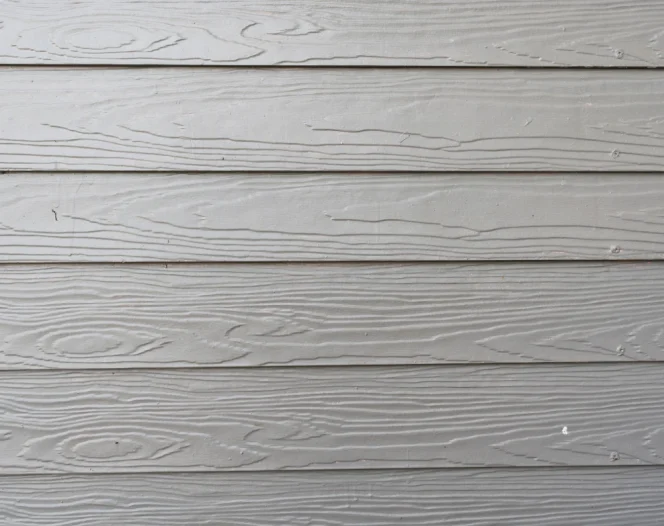
- Dense material construction: Fiber cement exterior siding combines cement, sand, and cellulose fibers to form a heavy-duty exterior layer designed to maintain dimensional stability through substantial temperature changes.
- Fire resistance: The cement-based composition provides strong resistance to fire, giving property owners an exterior material suited to applications where reducing the combustibility of siding is an important consideration.
- Rot and termite resistance: Unlike natural wood, fiber cement does not provide the same conditions for rot or termite damage, helping protect the exterior from two common sources of deterioration.
- Impact resistance: The structural density of fiber cement helps the material withstand physical wear and impacts from storm debris, making it useful for properties exposed to demanding weather conditions.
- Wood-grain appearance: Fiber cement lap siding can reproduce traditional wood-grain texture, allowing homeowners to achieve classic architectural character while selecting a dense cement-based material.
- Long-lasting painted finish: Fiber cement can hold paint for extended periods, supporting a finished exterior that combines color flexibility with reduced concerns about frequent repainting.
Installing this material requires preparation and accurate handling. Fiber cement panels and lap siding planks are heavy-duty products, so specialized cutting equipment is used to create the pieces required for walls, openings, corners, and other exterior details. Careful measurements help reduce unnecessary gaps and establish consistent courses across visible sections.
Fastening is equally important. Corrosion-resistant fasteners help secure the material while supporting an exterior assembly designed for prolonged weather exposure. Proper placement needs to account for the characteristics of the siding and the requirements of the wall section rather than treating each plank as an isolated piece.
Clearance around trim elements also contributes to moisture management. Siding should not be positioned in a way that encourages prolonged moisture absorption at vulnerable edges. Maintaining the required spacing helps the material work with trim, flashing, and surrounding exterior components.
Seam caulking adds protection at appropriate connection points. Precise application helps close areas where moisture could otherwise challenge the siding assembly. The goal is not simply to cover the building with dense panels, but to create a properly detailed exterior where siding, seams, trim, fasteners, and clearances work together.
Fiber cement’s dimensional stability can be valuable in a climate where exterior materials encounter significant temperature changes. Repeated heating and cooling can challenge siding over time. A structurally dense material designed to remain stable through these shifts can provide a strong foundation for long-term exterior performance.
Appearance remains an important advantage as well. Property owners do not necessarily have to sacrifice traditional exterior character to gain the performance characteristics of a cement-based product. Wood-grain textures and lap siding profiles can create familiar architectural lines while the underlying material provides resistance to fire, rot, termites, and physical wear.
Upgrade To A Stronger Exterior Built For Long-Term Use
Choosing new siding is both a protective and architectural decision. The exterior needs to withstand changing weather while contributing to the overall appearance of the property. Materials that deteriorate from moisture, pests, or physical wear can require ongoing attention and eventually leave underlying areas more exposed. Fiber cement addresses these concerns with a dense composition designed for demanding exterior conditions.
Fiber cement siding replacement can make sense when existing siding has widespread deterioration that is no longer practical to address through isolated repairs. Removing worn material gives property owners an opportunity to establish consistent exterior coverage and review applicable areas beneath the old siding before new panels or planks are installed.
The installation process requires more precision than simply fastening boards across a wall. Heavy fiber cement pieces must be measured and cut for the specific exterior layout. Openings for windows and doors, corners, trim, and other transitions need careful attention so the siding fits the architecture of the property.
Corrosion-resistant fasteners are used to secure the material, while appropriate clearance spacing helps control moisture exposure around trim elements. Seams also need careful caulking where required. These details are important because the long-term value of a durable siding material still depends on installation practices that respect the characteristics of the product.
Fiber cement can be especially appealing to property owners who prefer the visual character of wood siding but want greater resistance to several common exterior threats. The material can reproduce wood-grain texture while avoiding the same vulnerability to rot and termites associated with natural wood.
Its fire resistance adds another practical characteristic. Exterior material selection can influence how different parts of a building respond to heat and flame, and fiber cement’s composition gives it a notable advantage over combustible siding materials. This characteristic works alongside its resistance to impacts and physical wear.
Storm debris can also challenge siding. Wind-driven objects and falling material may strike exterior walls during severe weather.
Fiber cement’s structural density provides strong impact resistance, helping the surface withstand physical conditions that could damage less substantial materials.
The material also offers dimensional stability during temperature shifts. Exterior siding continually experiences heating and cooling as seasons and daily conditions change. Fiber cement is designed to maintain its shape through these variations, supporting consistent exterior lines and long-term performance.
Paint retention can further benefit property owners who want lasting color. Fiber cement is suited to painted finishes that can maintain their appearance for extended periods. Homeowners can therefore select an exterior color that complements the roof, gutters, trim, windows, and other architectural components while benefiting from the durability of the underlying material.
GAMO Restoration brings more than 30 years of industry experience to exterior projects. We understand that premium material alone does not determine the outcome. Preparation, measurements, cutting, fastening, clearance, caulking, and finishing details all influence how the completed siding looks and performs.
Our project approach is centered on focused attention. Rather than stretching our team across too many jobs at once, we give each property the time and resources needed to address important installation details. This helps us maintain careful workmanship from the initial exterior preparation through the final siding sections.
We are fully licensed and insured and maintain a BBB A+ rating. Our work is backed by a five-year workmanship warranty, and free estimates are available for property owners considering new siding. Military personnel and first responders can also receive a 10% discount on qualifying projects.
The right exterior material should fit both the property’s appearance and the owner’s priorities. For customers who value resistance to fire, rot, termites, impacts, and temperature-related movement while still wanting traditional wood-grain character, fiber cement provides a strong option.
If your current siding is deteriorating or you want a denser exterior material for your next project, GAMO Restoration can help you evaluate the property and plan the installation.
With careful handling, proper fastening, precise seam work, and attention around trim, GAMO Restoration is a trustworthy solution for fiber cement siding installation needs in Lexington, KY.